Up And Down Again
Previous Part | Home | Next Part
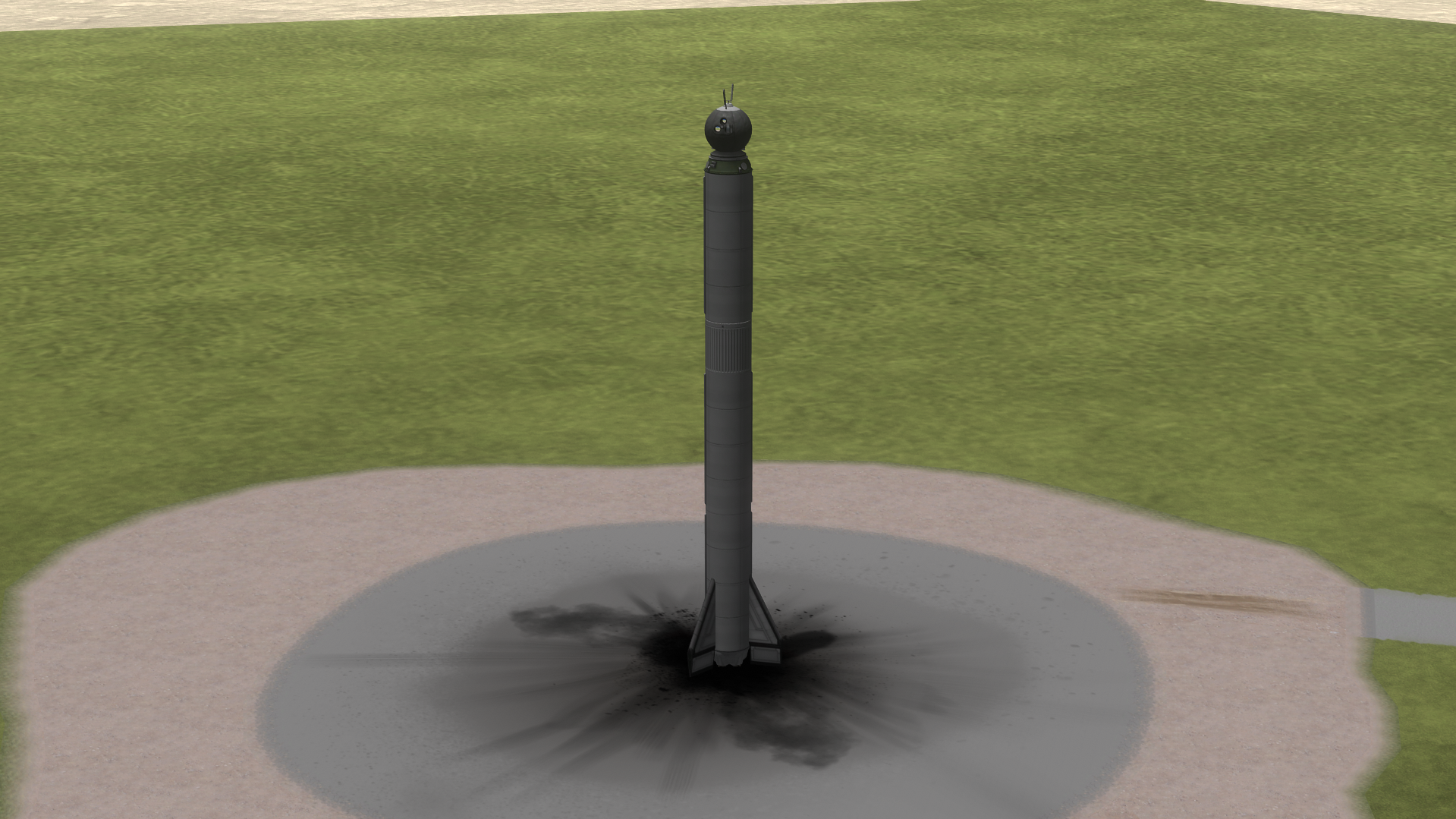
Horizontal flight experiments are quickly put on the backburner, simply due to how thin the atmosphere is. Oshan's sea level pressure is equivalent to over 20,000 meters high on Earth. Still, doesn't mean parachutes won't work.
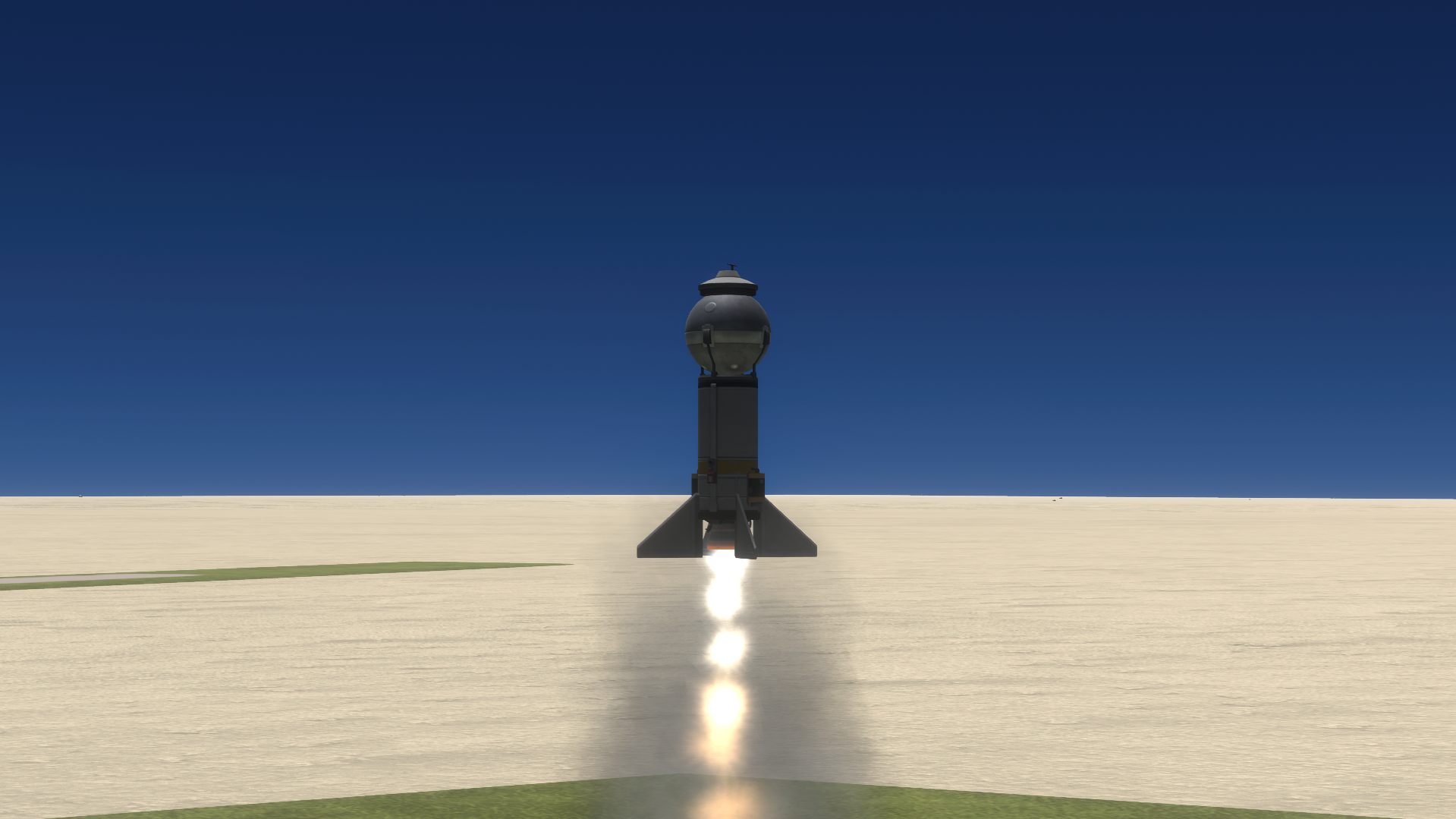
A smaller rocket is thrown up into the air, and given a large parachute, which is deployed a few kilometers up.

Even still, the oversized chute isn't quite enough for an intact landing, and the empty rocket motor becomes a lithobraking device.

For any future descent, parachutes alone likely won't cut it. Just to be certain, though...
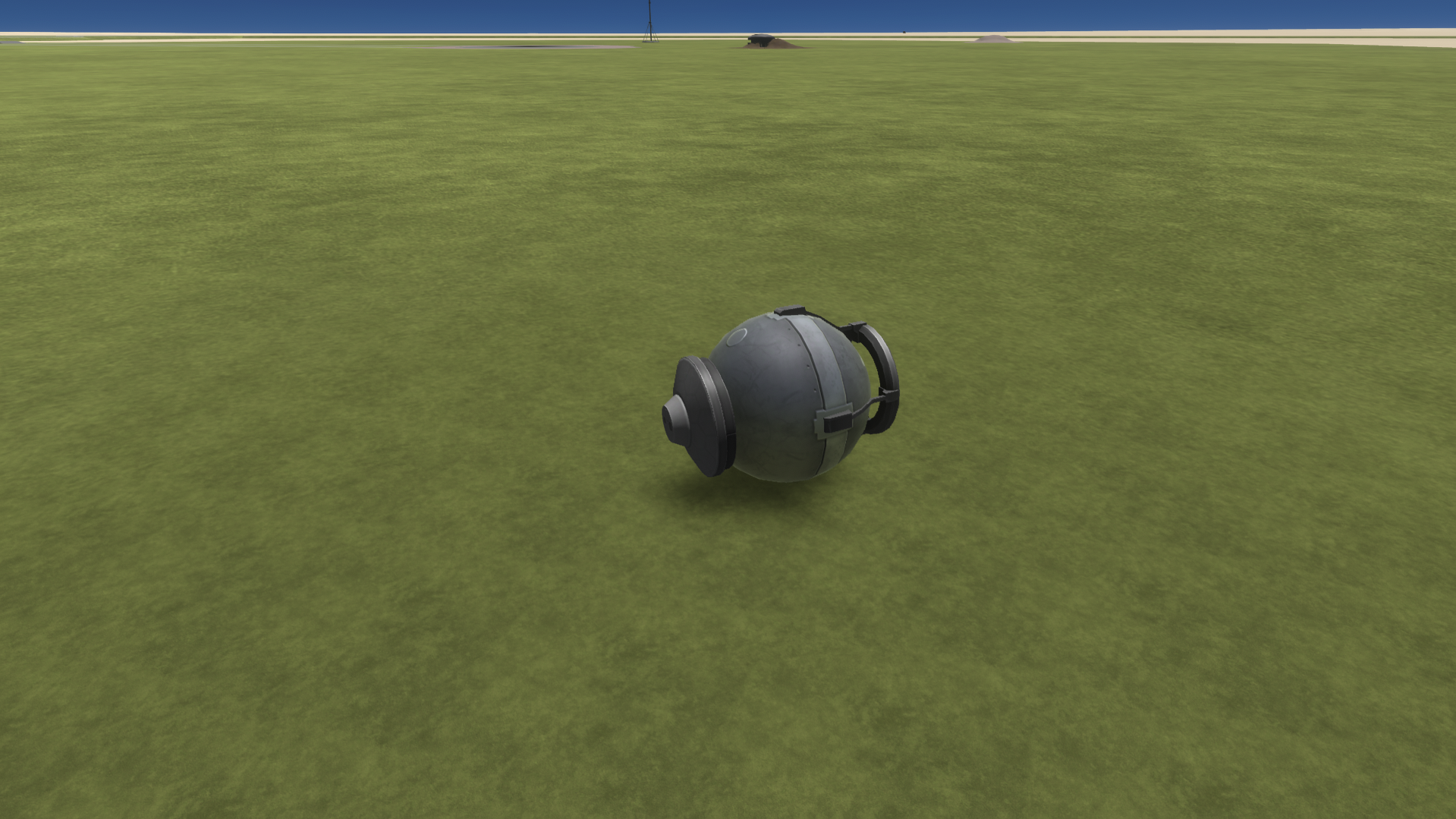
An uncrewed prototype of a space capsule, containing some avionics, and two small liquid rocket motors, is wheeled out.
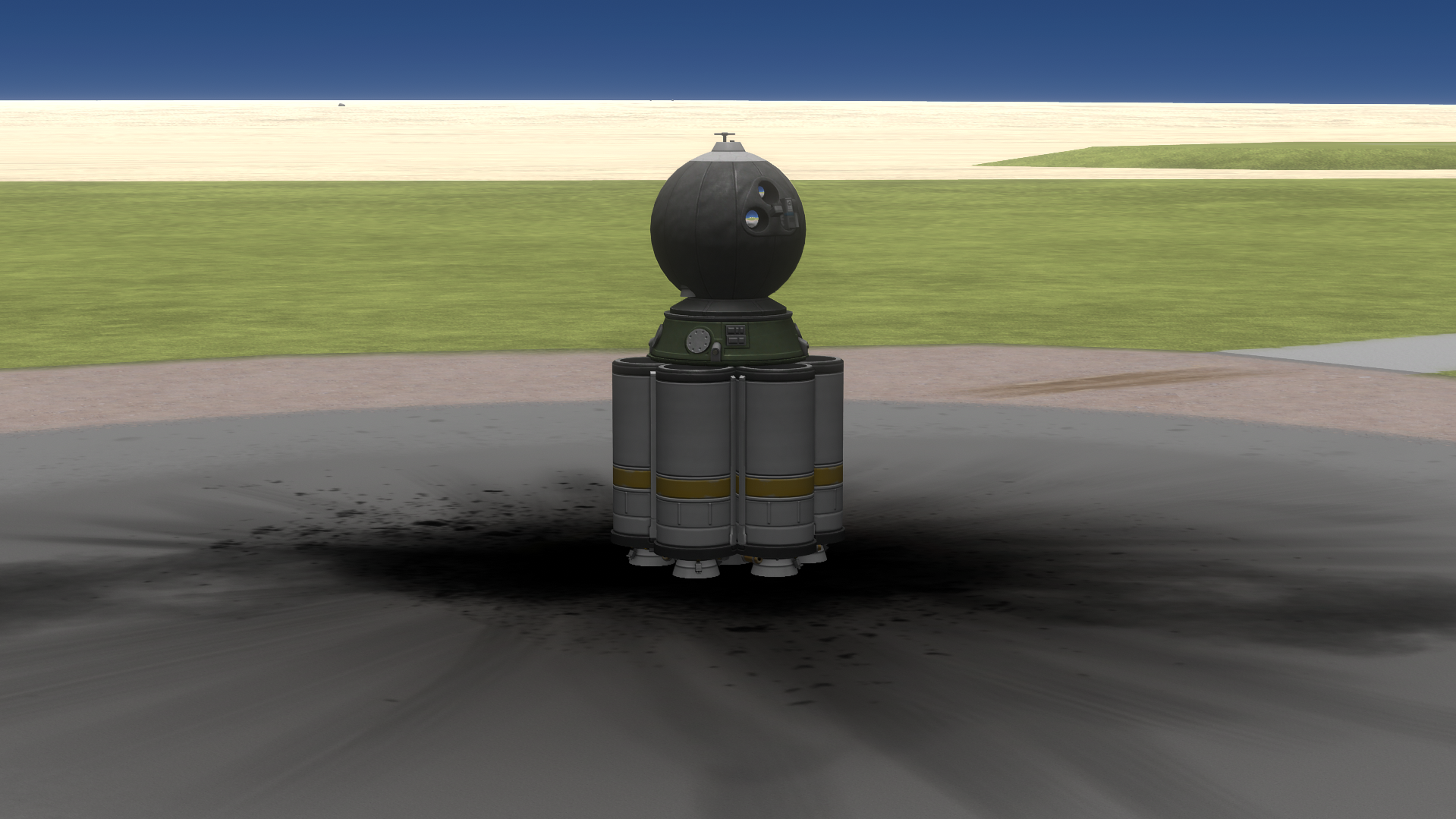
However, its fate would be sealed before it ever reached its peak, for the trajectory was too steep.
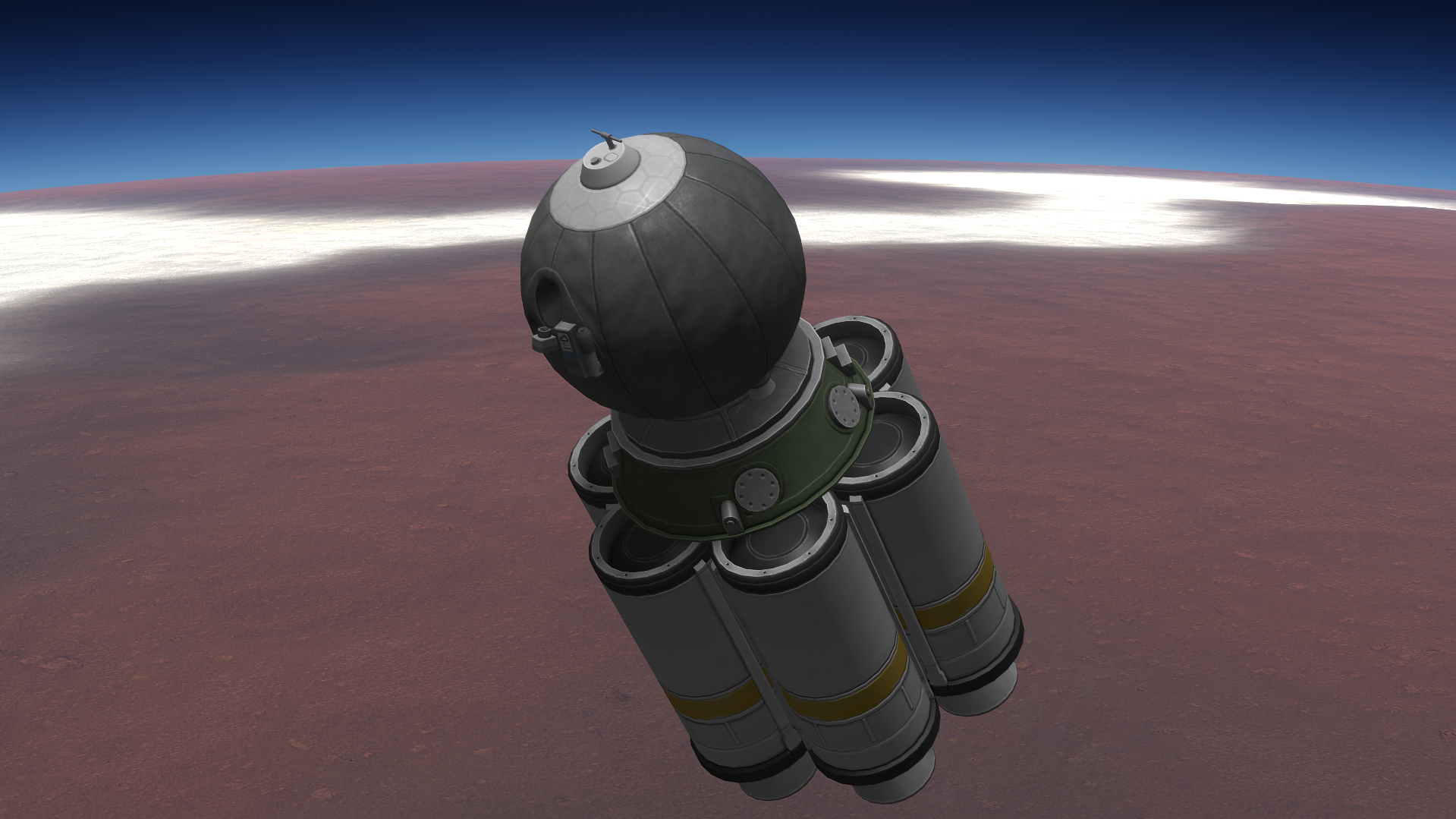
After seperation, the onboard guidance would wait for speed to get low enough for the parachute to deploy. That never happened, and it became another crater on the ice.
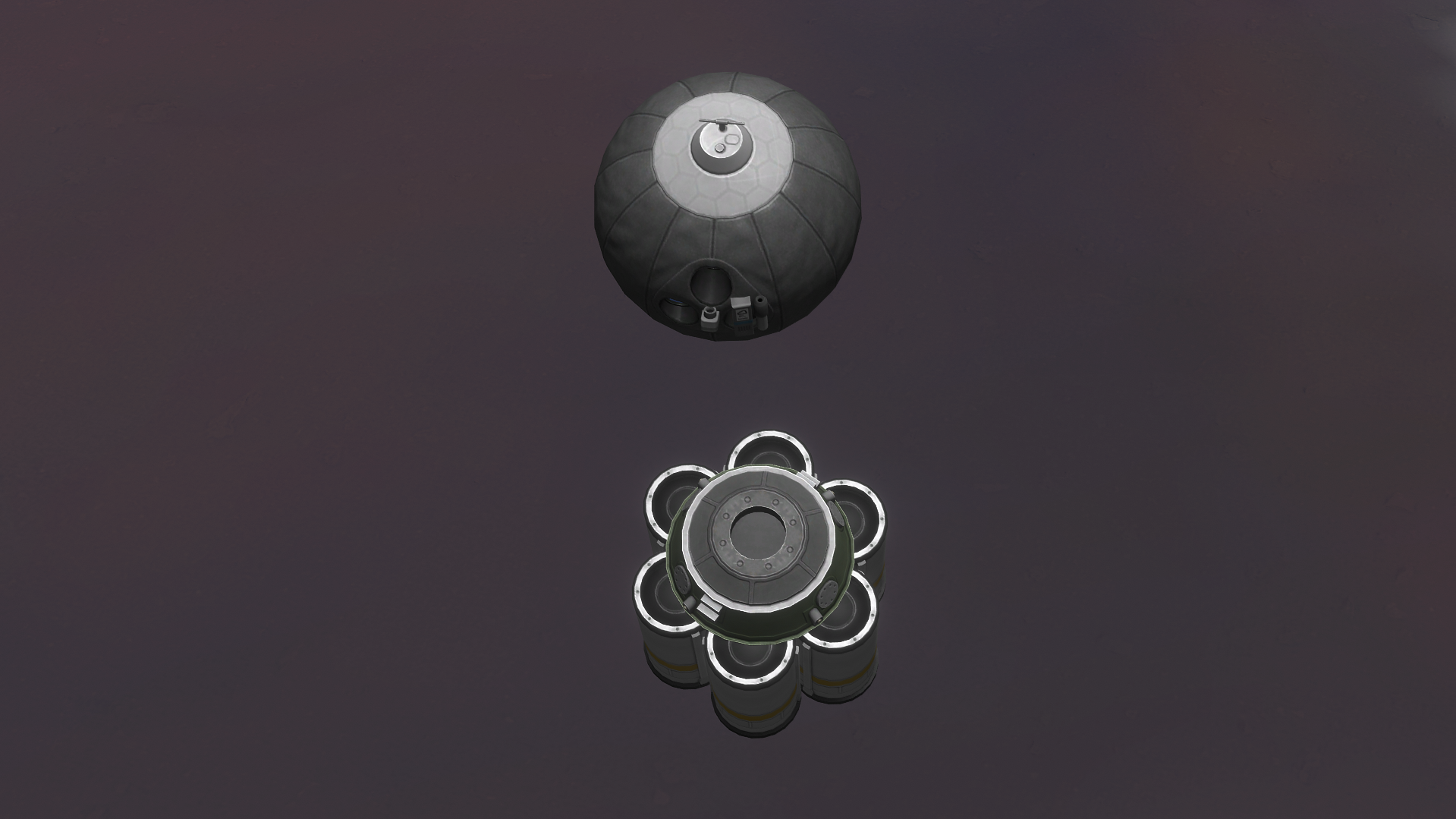
A few shifts later, with the trajectory tuned, another capsule prototype would be lofted, reaching just above the atmosphere before coming back down.
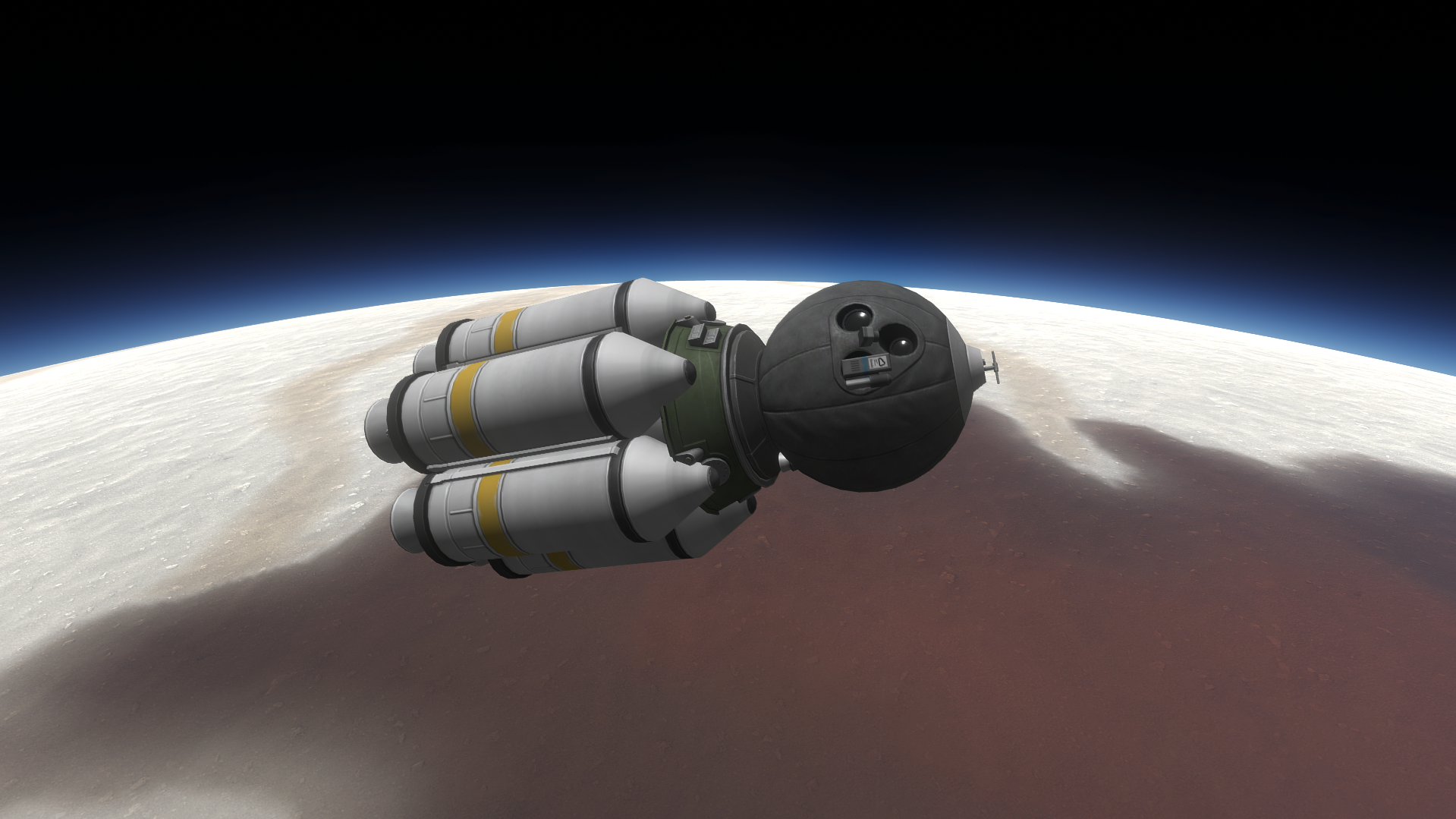
It would be manually commanded to fire its liquid rocket motors early, allowing for the chute to deploy.
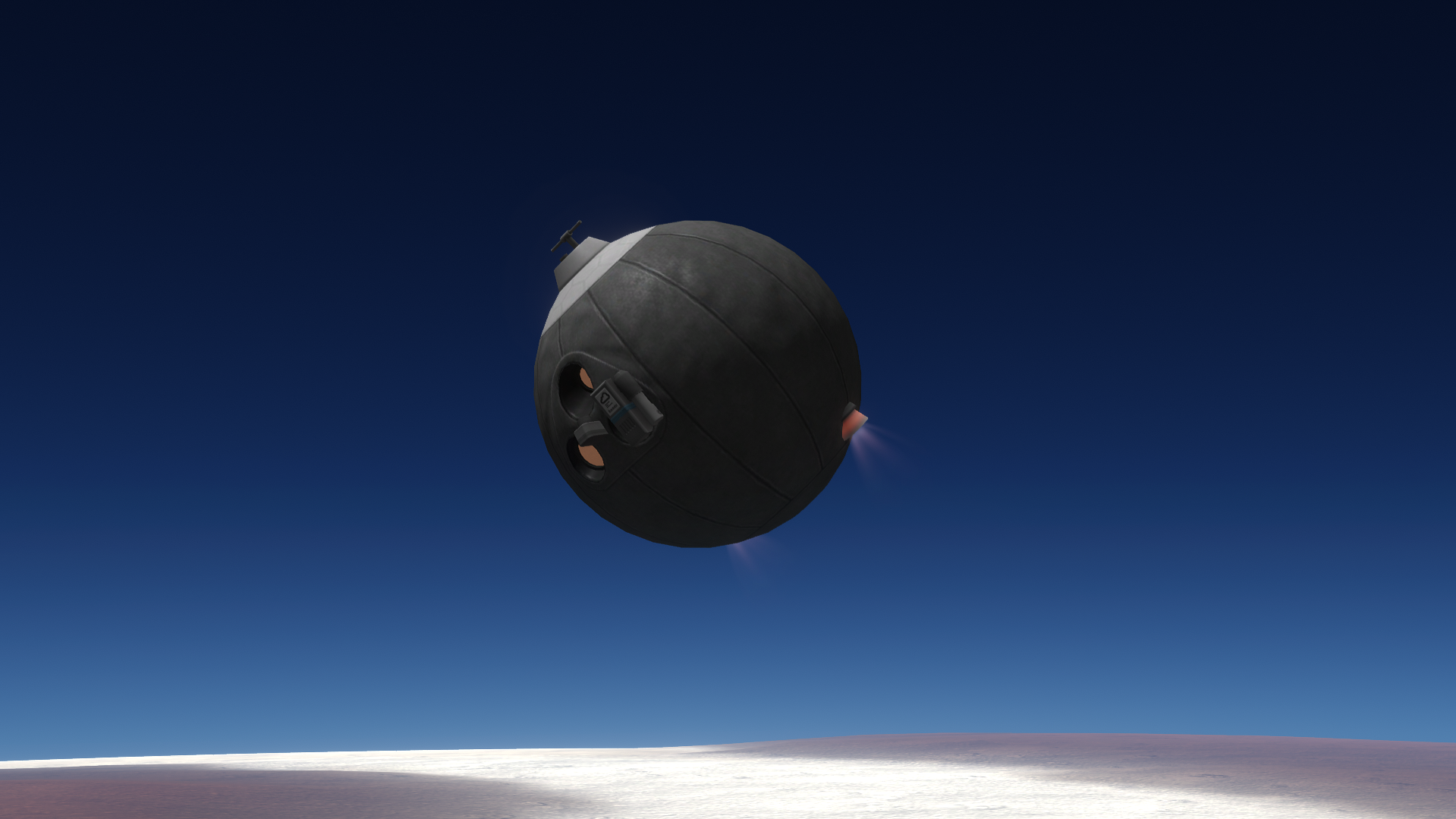
Parachute out, the rocket motors would wait until the capsule was just above the ground, before firing one last time to break the fall.
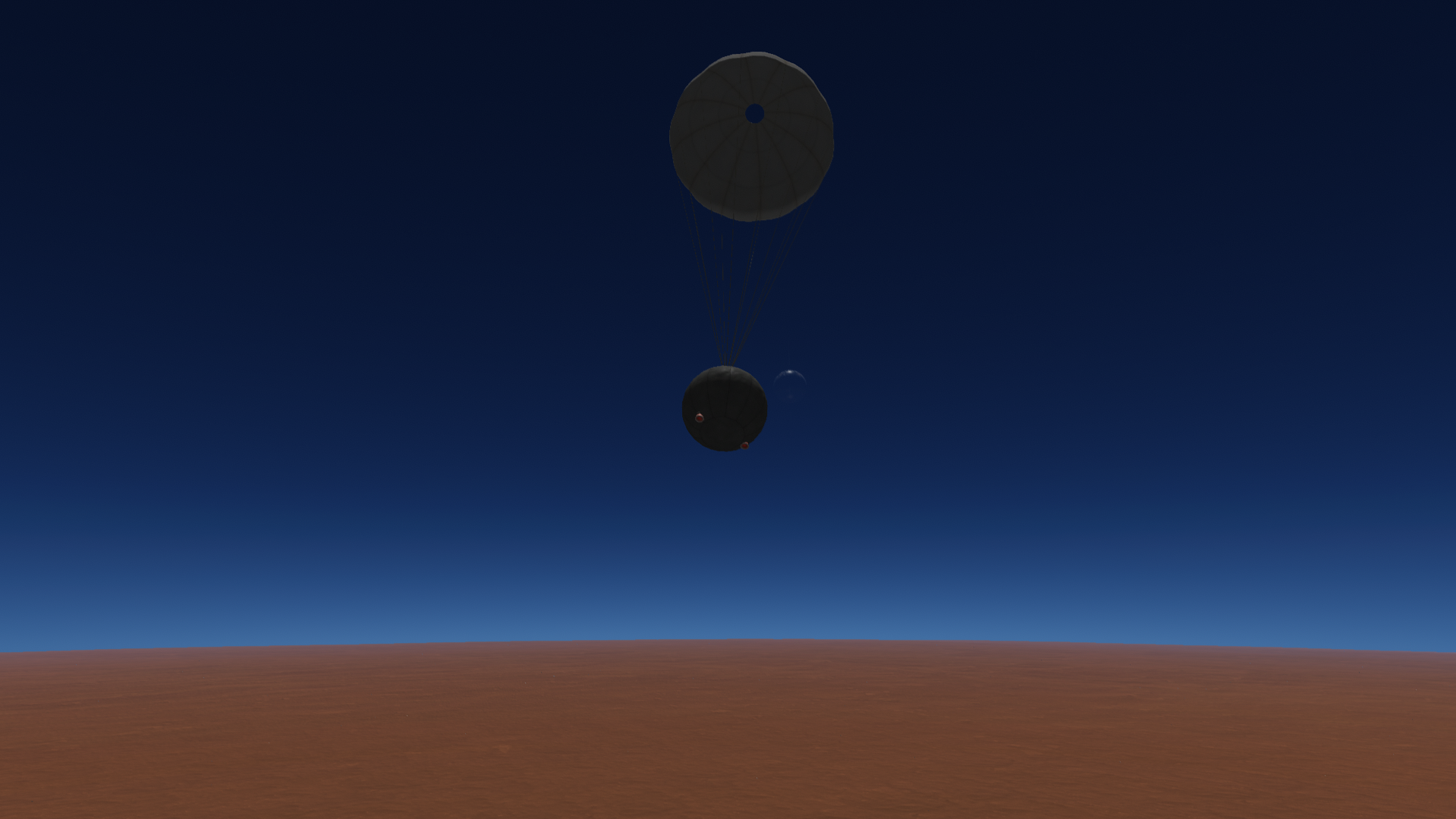
A few hundred kilometers east of the space center, the little capsule would come to an intact landing, rockets and parachutes working as a team to make it happen.
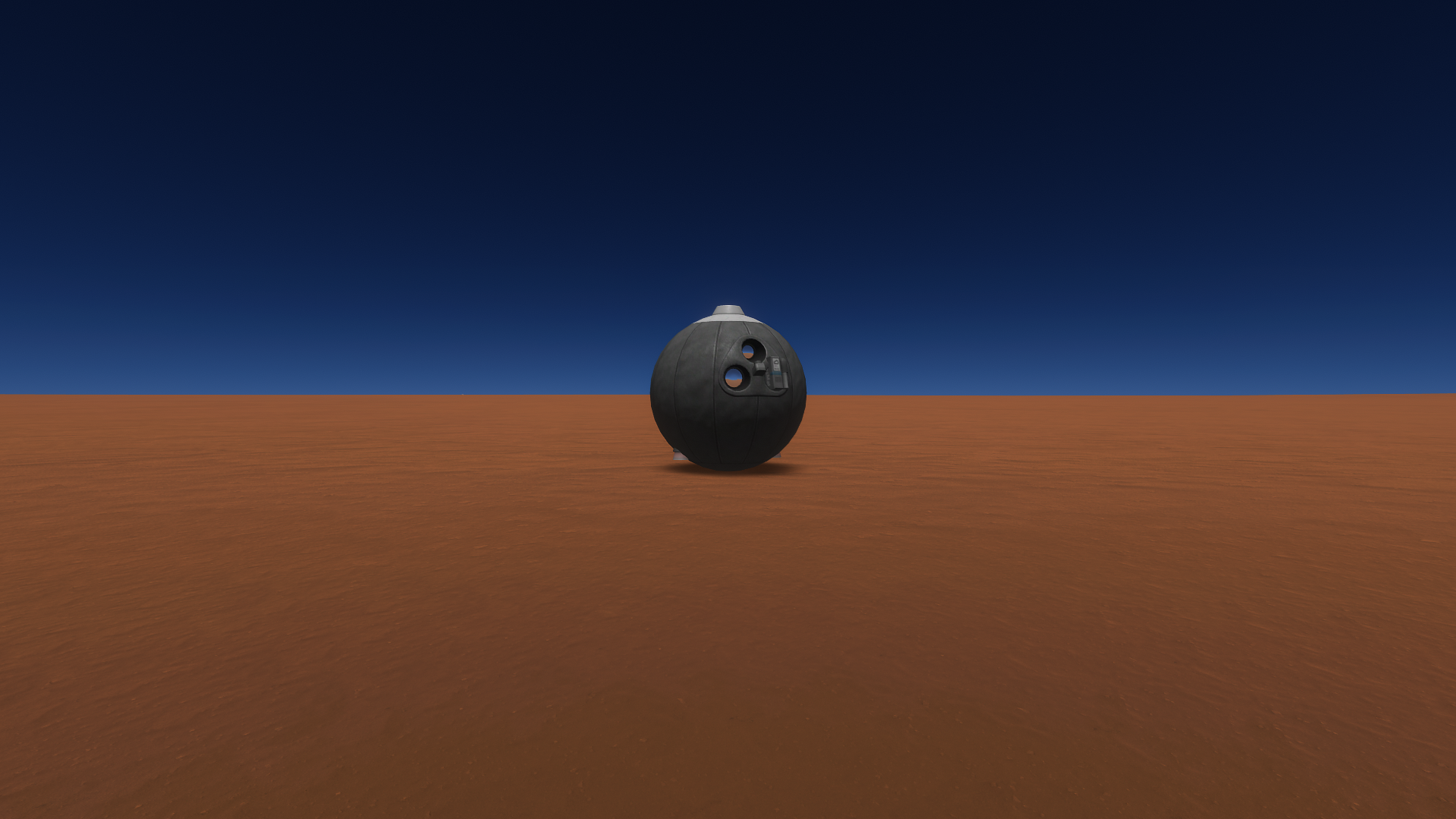
That worked great, let's lob one further!
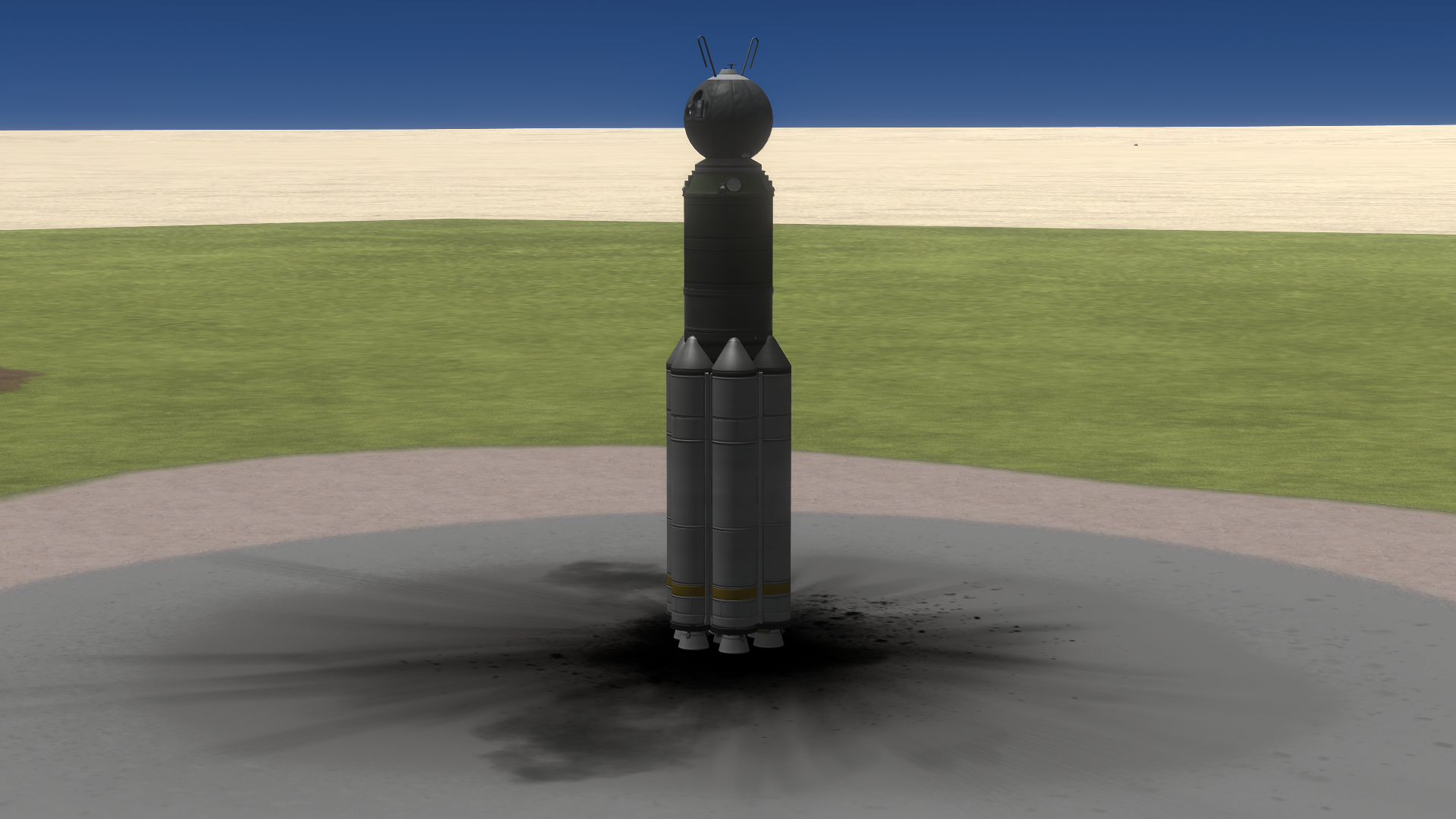
With a liquid fuelled second stage, this rocket can attain a much greater speed.
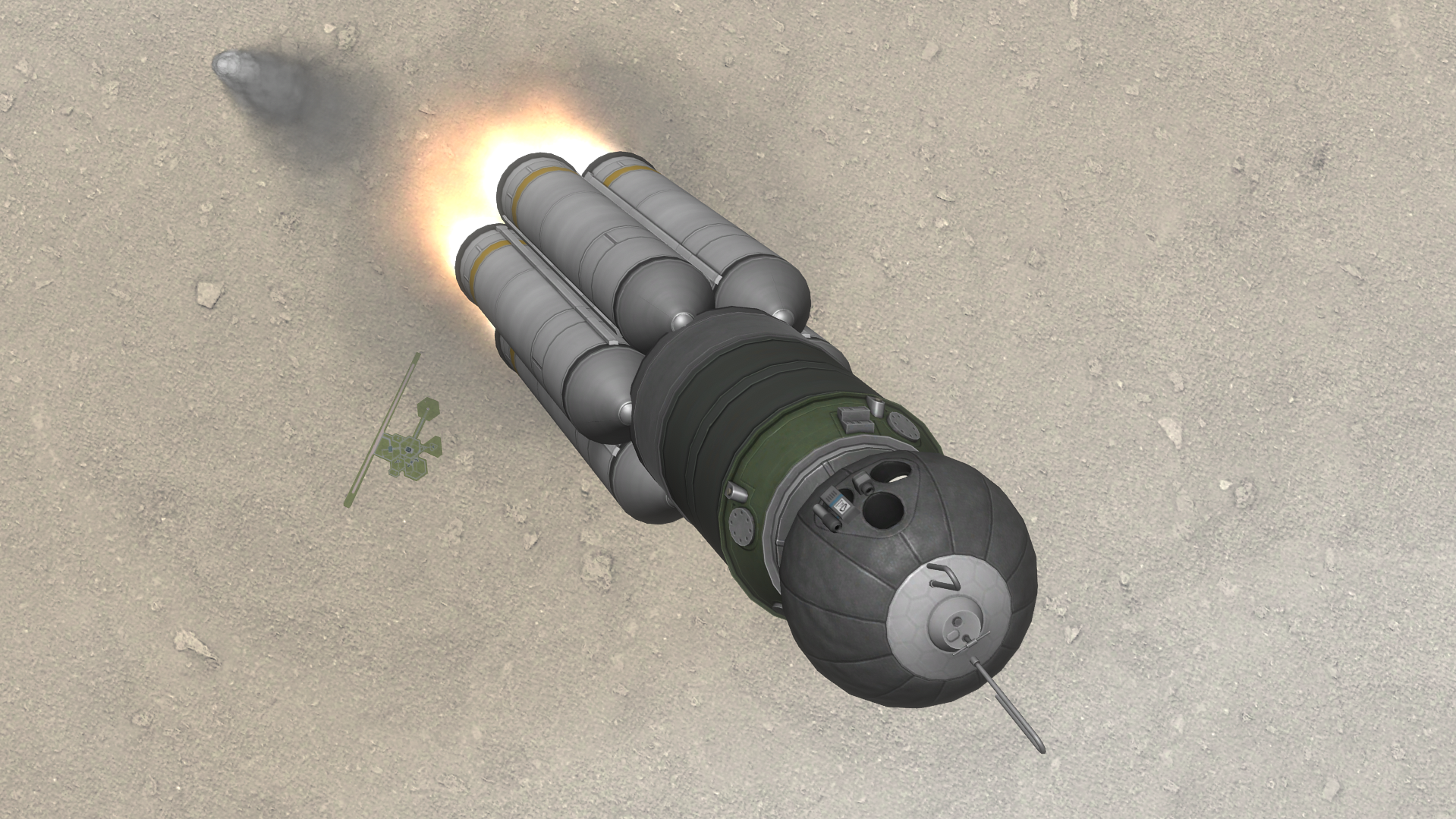
That speed, of course, would end up being the capsule-probe's downfall.
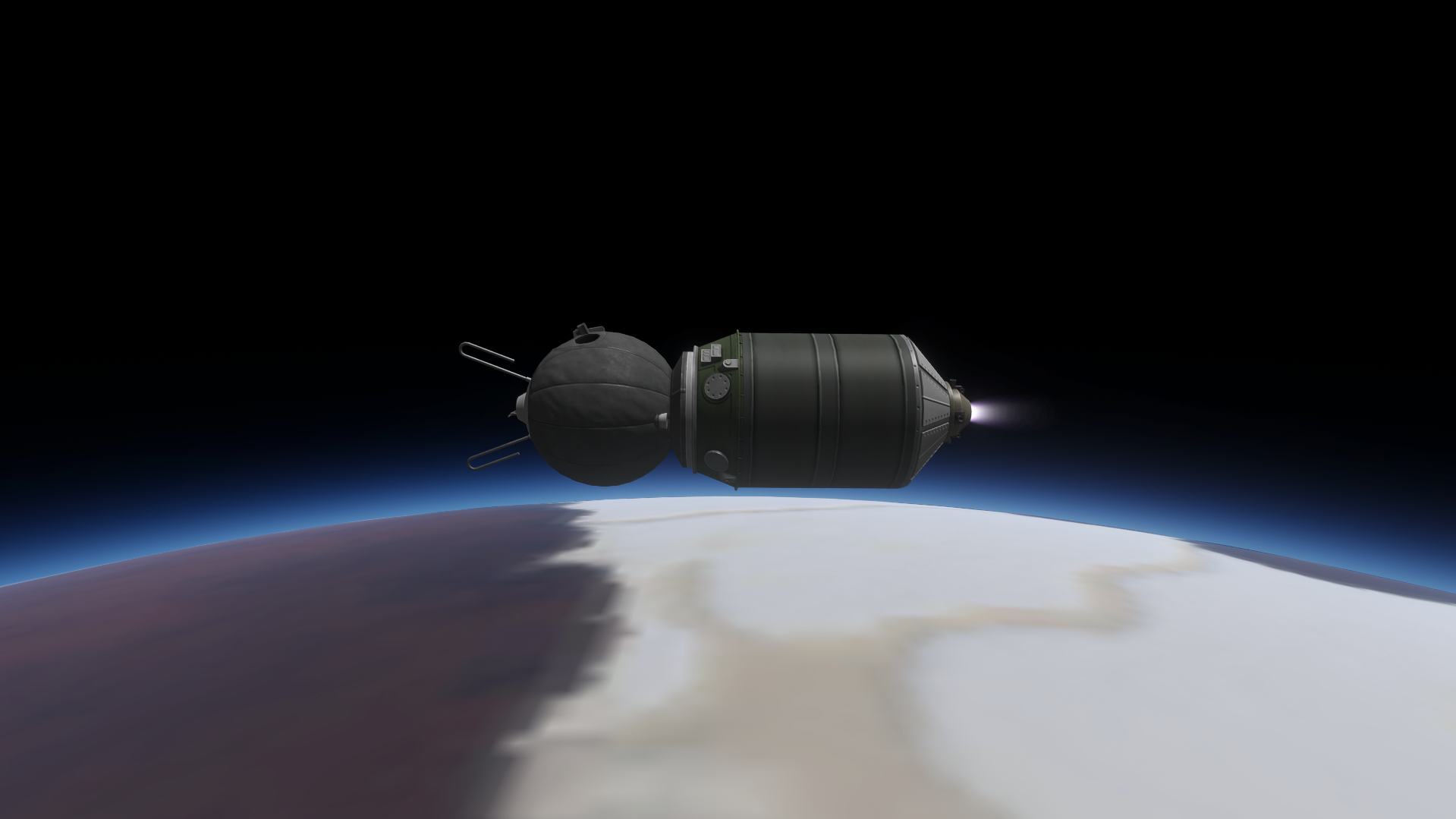
At nearly 2,000 meters per second, the rockets can't both slow for the parachute and enable an intact landing.
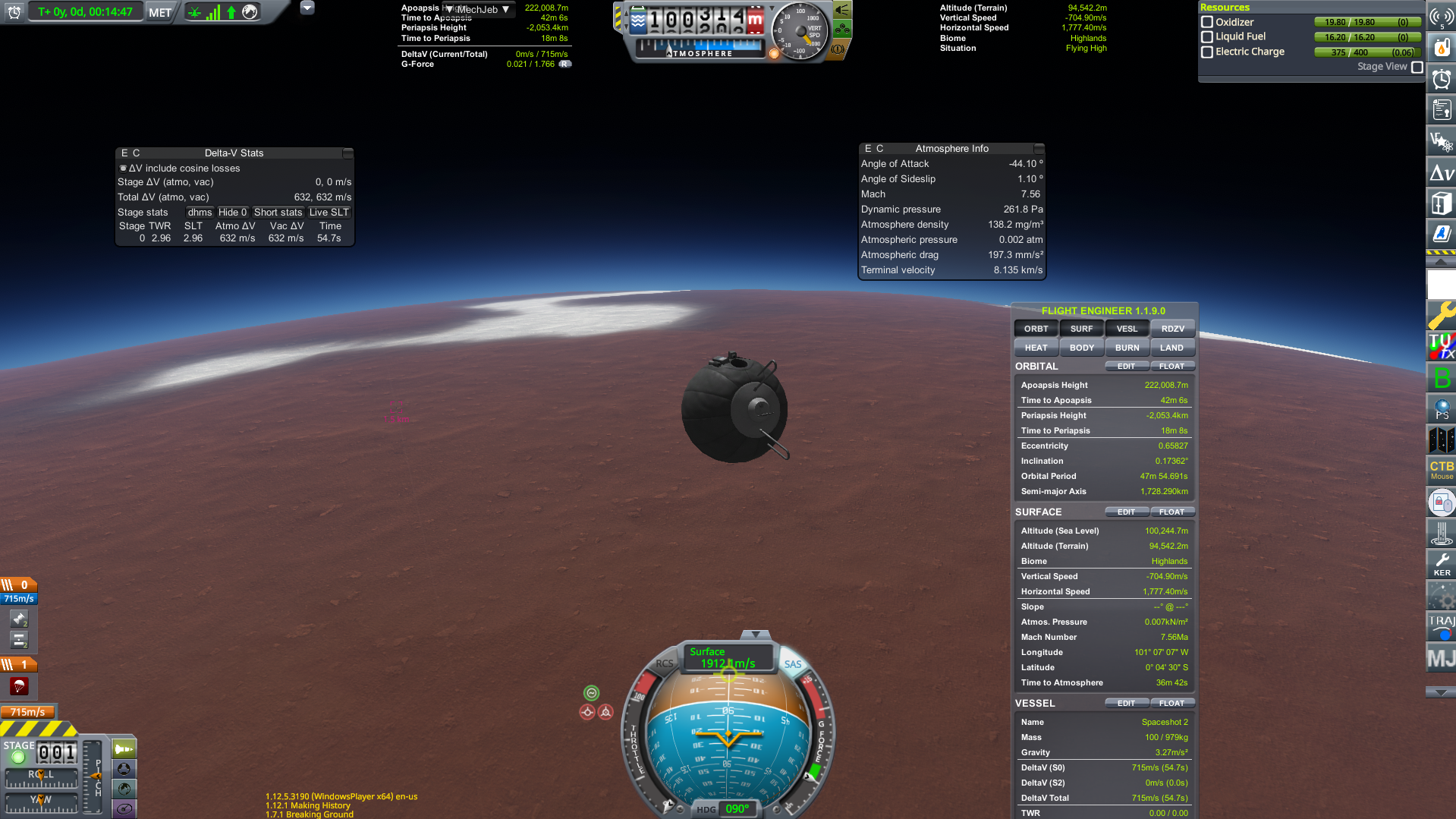
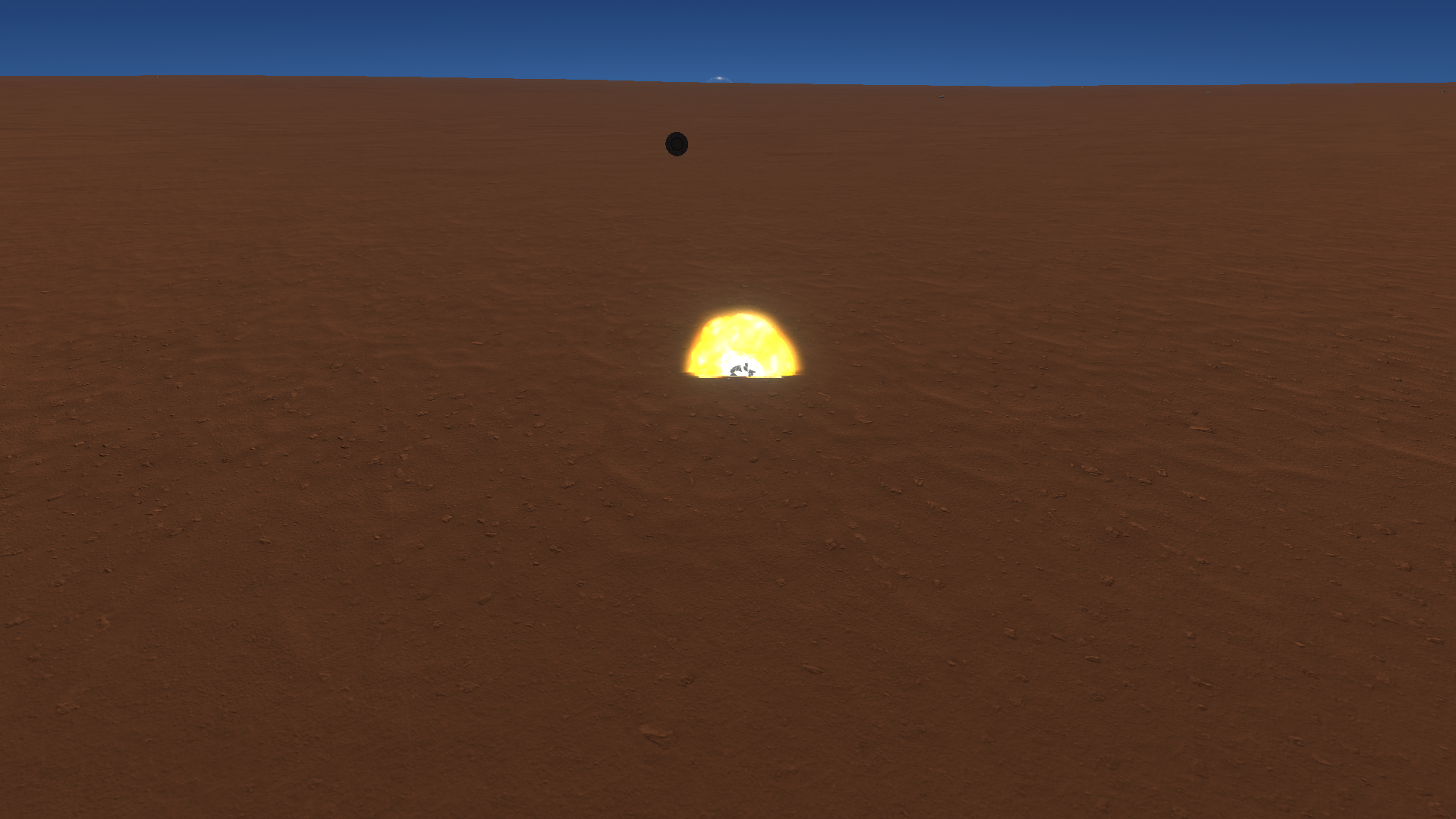
Even as the red, empty continents above the ice attain another scar, the folks down below are at the drawing board again.
If we want a shallower descent, we'll have to come in all the way from orbit. Let's get to work.